BISTRO KAREL
BRIEF:
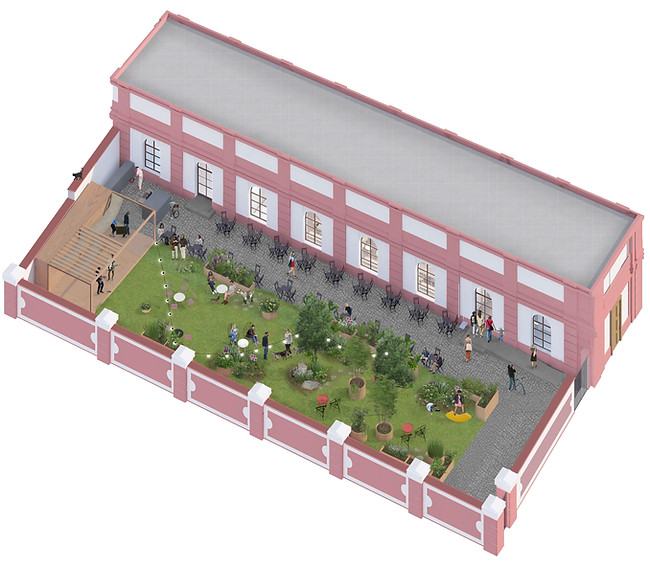
The task was to design the interior of a bistro with a grocery shop located in a former orangery of Troja Château, with an area of approximately 120 m², offering at least 50 indoor seats, and an adjoining garden of nearly 500 m² with a capacity of 50–80 seats.
The operation is conceived as a combination of bistro/café, wine bar, and restaurant. During the day, the space is primarily used for specialty coffee, homemade pastries, brunches, and lunches; in the evening, the operation shifts towards shared dining and dinners paired with wines from local suppliers.
The kitchen design was not part of the brief.
CONCEPT:
As the space was already structurally completed and major interventions into constructions or floors were not possible, the entire design is based on the principle of so-called “inserted elements” – independent volumes placed within the space that define its operation without burdening it.
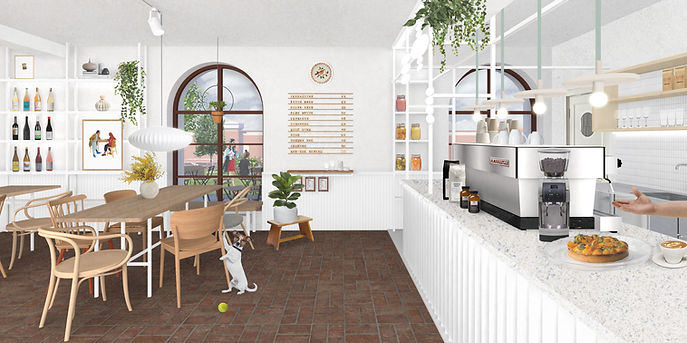
The key interior elements are two distinct volumes – the bar and the grocery shop – between which all café and restaurant activities take place. The bar is located at the end of the long, narrow space and functions as both a visual dominant and an orientation point. It is designed as a white-lacquered steel structure with shelving and an integrated display case for desserts, complemented by a front surface with subtly textured white tiling. The structure allows further visual changes through the addition of magnetic elements used for decoration or displaying the current menu.
At the opposite end of the space is the grocery shop, serving for the sale of local products – bread, coffee, wine, farm goods, and small items. The grocery shop also includes a second cash desk, enabling quick service for guests arriving only for purchases or brief seating at the bar counter.
The interior is designed to be highly flexible. The only fixed element is a long bench along one wall; all tables, smaller benches, and large planters are fully movable. This allows the space to be easily adapted for everyday operation as well as for larger events, weddings, or social gatherings.
Lighting plays an important role. Illumination is provided by ceiling-mounted rails that allow various types of light fixtures to be suspended and adjusted as needed. The design includes several lighting scenarios – from daytime diffused light to a more intimate evening atmosphere supported by wall lights, dimmable lanterns, and candles on tables.
Material-wise, the space combines white-lacquered steel with waxed oak wood. This light and calm base is complemented by subtle earthy accents in brick red or green tones. Emphasis is placed on working with tone-on-tone textures to avoid a sterile feel while maintaining lightness and timelessness.
The garden is conceived as an integral part of the café. It is designed flexibly, with movable furniture, raised planters, vegetable and herb beds, and shaded seating areas. In the future, the garden may be complemented by a stage, outdoor kitchen, or spaces for small cultural and community events.
The result is an open, adaptable space capable of responding to different operational modes while respecting the historical context of the site.
Year: February 202
*
Study – collaboration:
Anna Nižňanská,
Anna Podroužková
Area: 120 + 500 m2